“It still hurts on the stairs.”
Twelve weeks of quads and glutes, and the knee still aches. CES often finds the problem above or below it, at the hip or the ankle, with a muscle that never fully switched on.
 AMN Corrective Exercise Specialist · Online certification
The knee that still hurts after twelve weeks of strengthening. The shoulder that stops at shoulder height. The back that is fine on Monday and gone by Friday. CES teaches you to test the nervous system, find the muscle that has stopped firing, switch it back on and prove it to your client in the same session.
Or 2 × £300 · lifetime access · start tonight
You have met this client
The programme was sound. The cues were clear. The client did the work. And the same complaint walked back in the following week. Most trainers and therapists stop there and refer on. This is where CES starts.
Twelve weeks of quads and glutes, and the knee still aches. CES often finds the problem above or below it, at the hip or the ankle, with a muscle that never fully switched on.
You have stretched the pec and strengthened the cuff. CES tests the shoulder muscles one by one, then the lats, the neck and sometimes the opposite hip, until the test tells you which one has gone quiet.
Core work helps for a while, then it is back. An inhibited core shows up as pelvic, hip and lower back pain. CES gives you the test and the reflex resets that bring it back online.
The missing piece is a test.
Find what is switched off, switch it on, test again. Your client feels it, and you can show it.
The method
Three steps you can run in every session, with a client on your table or on the gym floor.
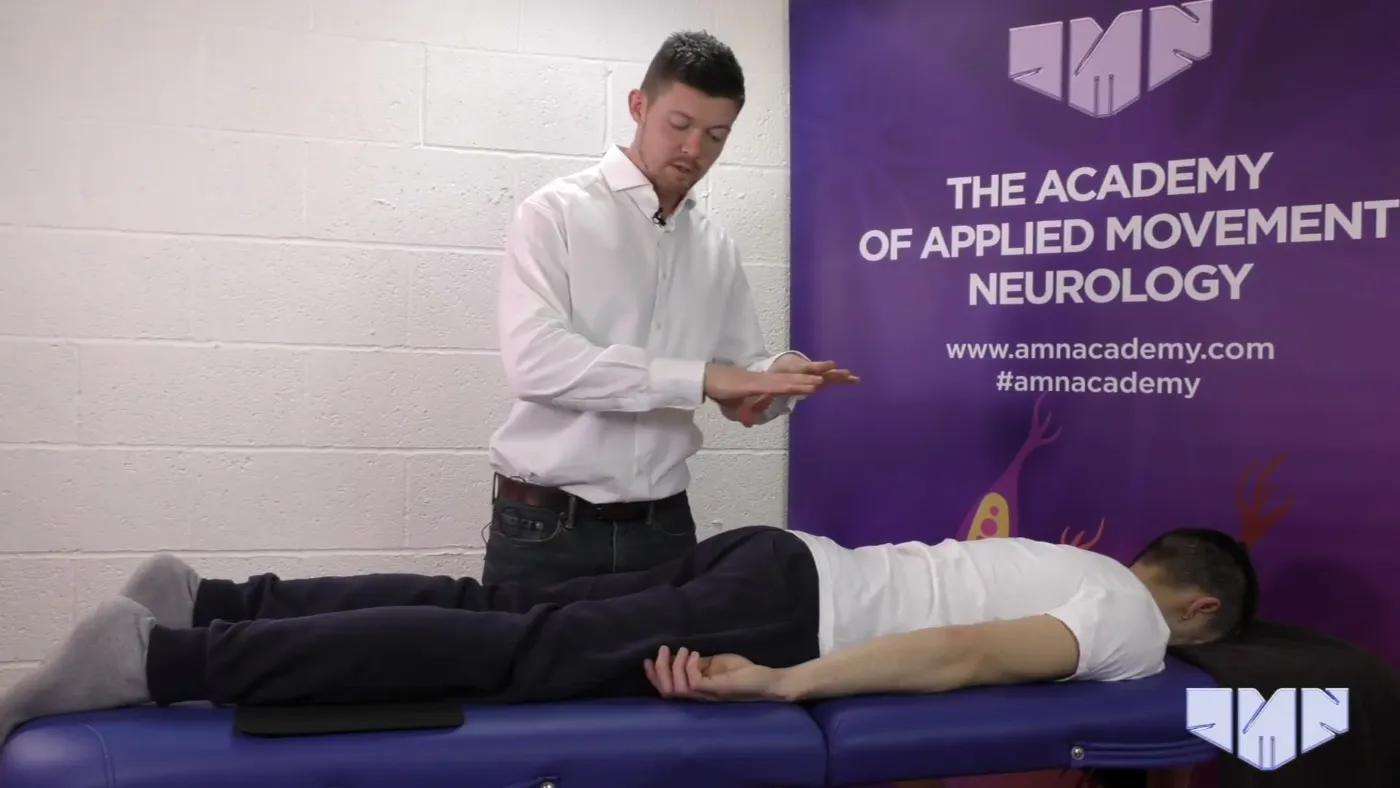
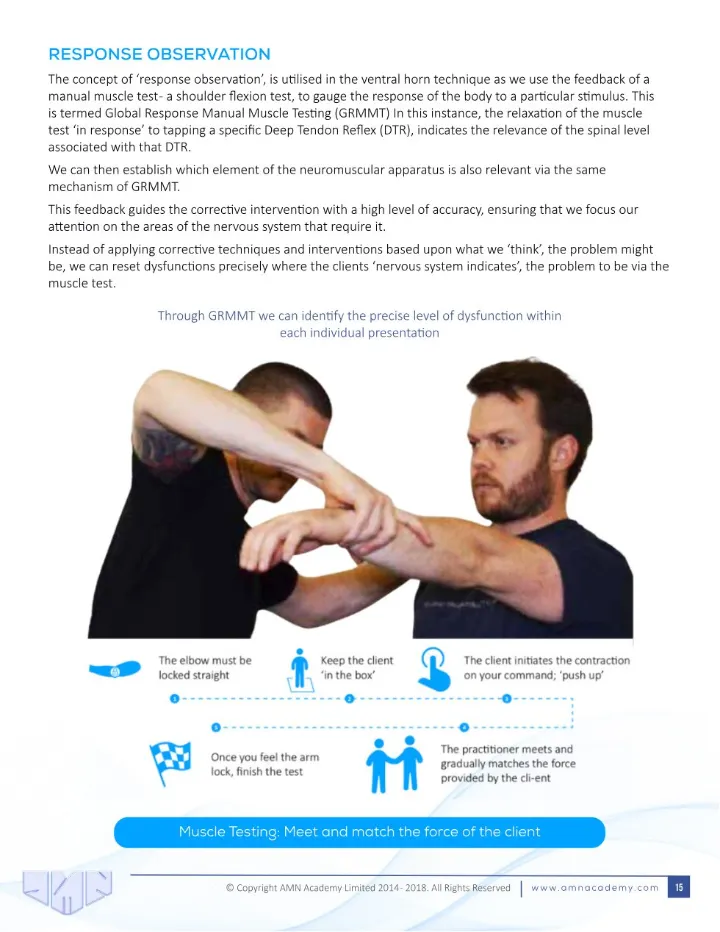
Orthopaedic manual muscle testing, joint range of motion and quick neurological tests. Your client meets and matches your pressure. A muscle that gives way has told you where to look.
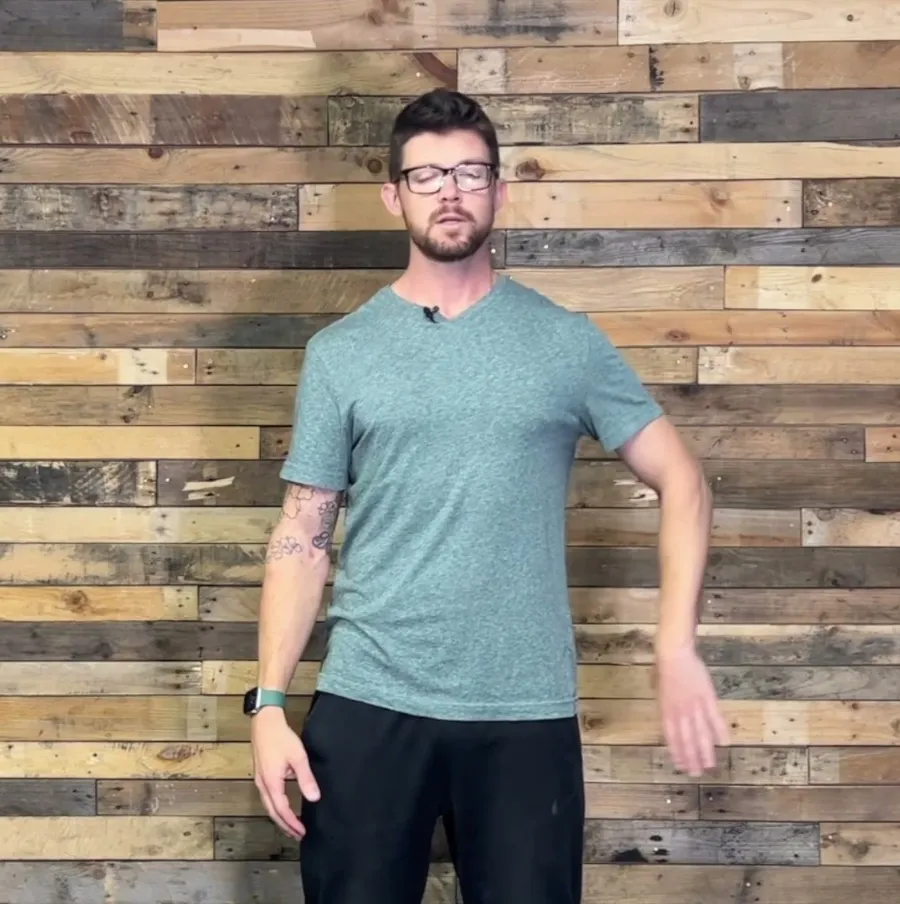
The ventral horn technique and peripheral nerve mobilisations. You work where the client's nervous system shows the problem, instead of where you guess it might be.
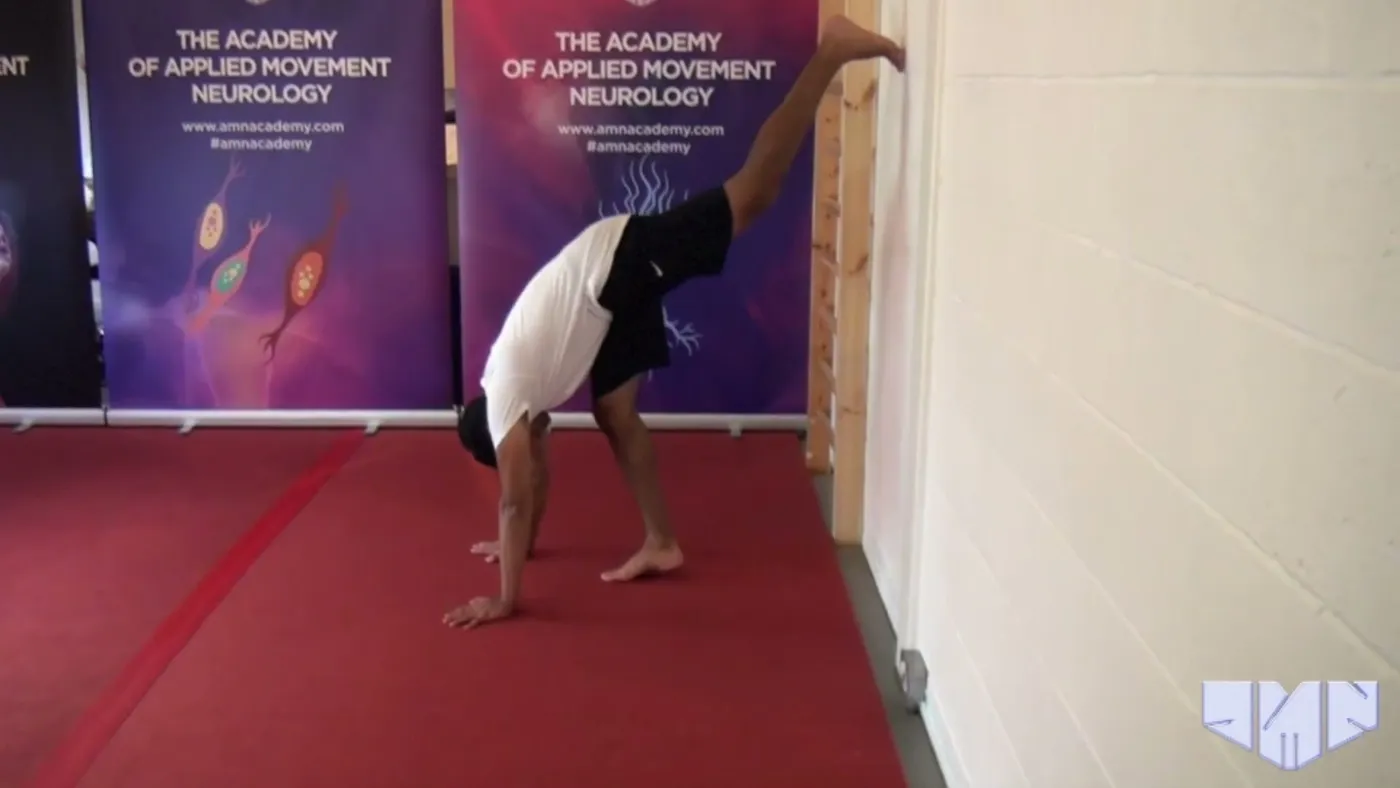
Corrective and restorative movement, then strength and skill work so the change lasts. Re-test, and your client sees the difference with their own eyes.
Inside CES
Every chapter is filmed on real bodies and written up in the manual. Here is what you take into your next session.
Chapter · Peripheral nerve mobilisations · 16 lessons
Tingling down the leg. Burning across the shoulder. A patch of skin that feels numb. You stretch the hamstring every week and it never lets go.
Nerves have to slide and lengthen every time the body moves. When one sticks to a muscle it passes through, you see pain, restriction and a muscle that tests weak, however much you stretch it. In this chapter David shows you how to test the muscle a nerve supplies, mobilise that nerve, and test again.
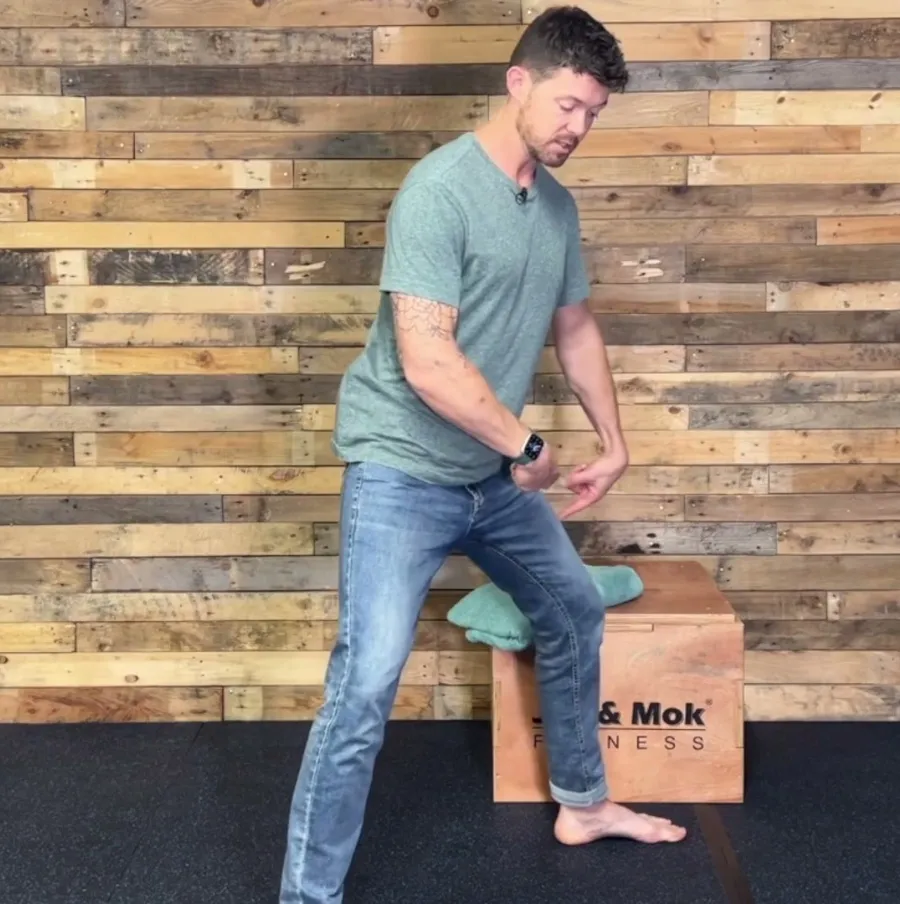
Old surgery or scar tissue where you should not work locally? Your spinal cord links each leg with the opposite arm in the walking pattern. David shows you how to free the leg by mobilising the arm first.
Identify
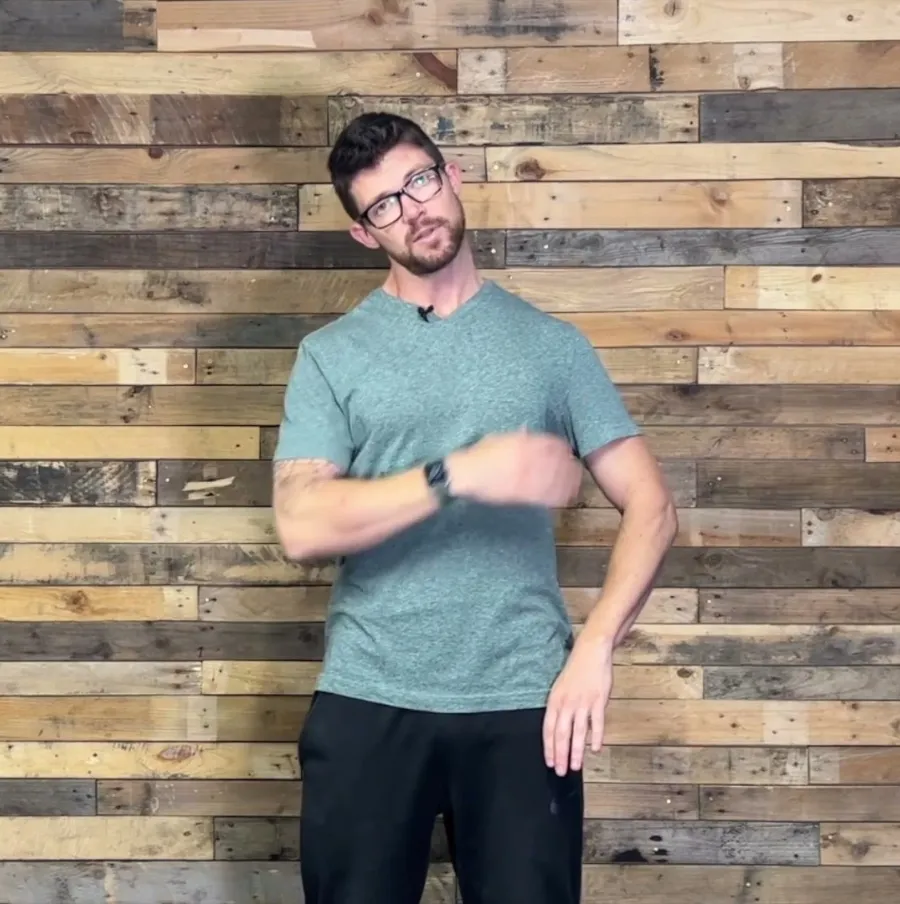
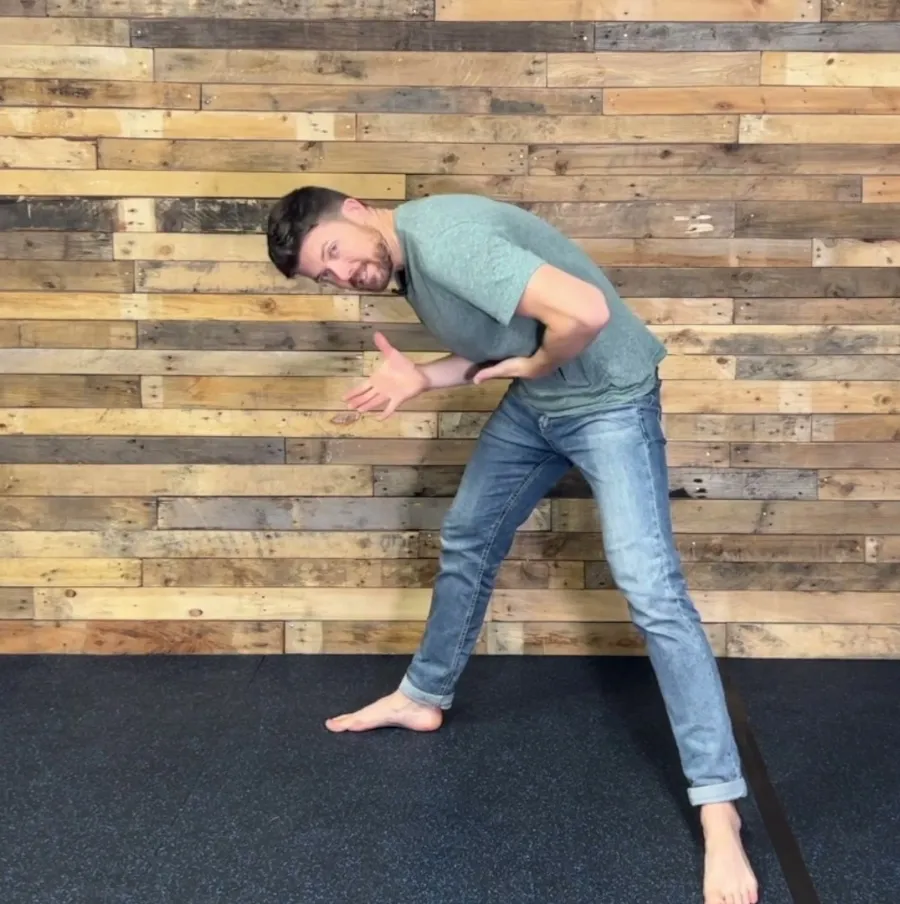
A complete testing flow of 19 muscles from the ankle to the shoulder, plus rapid alternating movements, the sharpened Romberg and the peripheral visual field. Run it in minutes, and know where to start.
Reset · 16 lessons
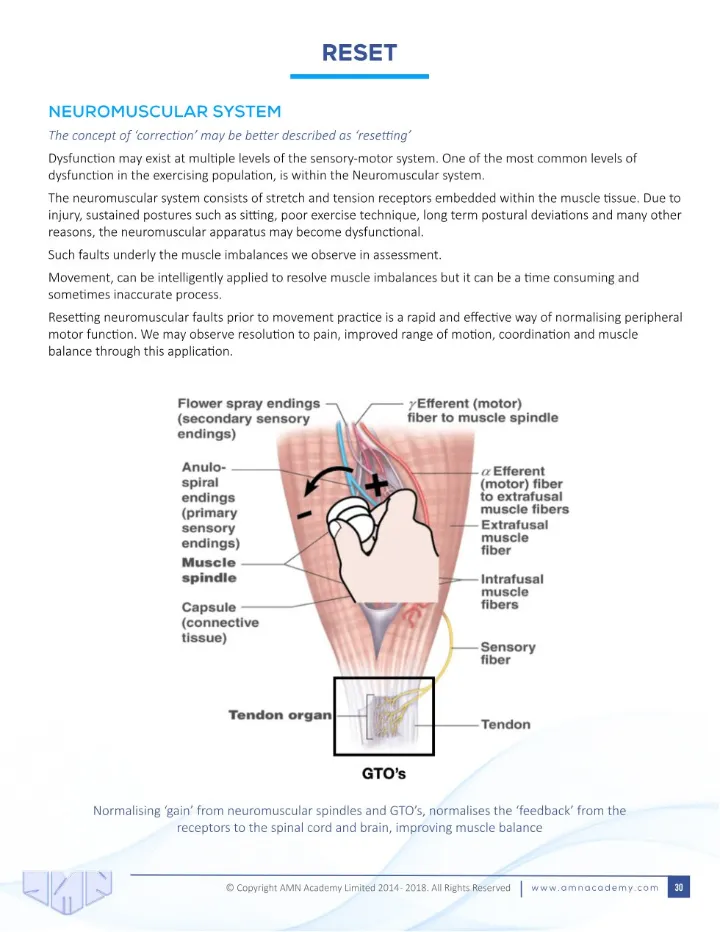
Tap a deep tendon reflex and watch the muscle test. If it gives way, the client's nervous system has just shown you the spinal level involved. David created this technique. You learn it prone, supine and creatively on the upper and lower limb.
Reset
An inhibited core drives pelvic, hip and lower back pain. You learn the test, reflex resets through the skin, eyes, joints and fascia, then the gymnastics-based core work that keeps it on.
Reintegrate
Movement flows for the sacroiliac joint, groin, hips, spine, foot and ankle, shoulder and pec. Use them as a corrective, a warm-up, recovery or a session on their own.
Long-term adaptation
The full AMN warm-up, a foundational strength sequence, and flexibility work for the pike, pancake, bridge and squat with PNF and loaded stretching.
Strength and skill · 65+ progressions
Handstand, bent arm planche, muscle up, front lever, back lever, L-sit and pistol, each broken into 7 to 11 filmed progressions. Plus crawling patterns for coordination.
Included
The CES manual follows the video lessons chapter by chapter: pain theory, the testing flows, the ventral horn technique, nerve mobilisations, strength and skill programming. Download it on day one and keep it next to your treatment table.
The full curriculum
Short lessons you can watch between clients, 15 to 20 minutes a day. No deadlines and lifetime access, so you can come back to any lesson when a client needs it.
Introduction to the AMN CES certification. Pain theory: why pain can appear with or without damage, the pain neuromatrix and nociception.
Manual muscle testing: ankle, straight leg, bent leg, upper limb and the complete testing flow. Self-assessment, neurological tests and biofeedback.
Anatomy and physiology, bioelectricity, getting the client "online" with troubleshooting, the spinal cord, the neuromuscular apparatus, the deep tendon reflex, practical application prone and supine, creative application on the upper and lower limb.
Upper limb: suprascapular, spinal accessory, axillary, ulnar, radial, musculocutaneous. Lower limb: femoral, saphenous, obturator, common fibular, tibial, sural, sciatic. Inter-limb coupling.
Concepts of corrective movement, body circles, spine integration, partner stretching for the upper and lower limb. Restorative movement for the sacroiliac joint, groin, hips, hamstrings, quads and psoas, spine, foot and ankle, shoulder.
Core classes 1 and 2, core activation revision, the orthopaedic break test, the vestibulocollic reflex, a visuomotor drill and the cranial sutures.
The AMN warm-up in full and step by step, foundational strength, spine and full-body mobility, flexibility for the pike fold, straddle pancake, bridge and squat.
Handstand, bent arm planche, muscle up, front lever, back lever, L-sit and clock L-sit, pistols, bent arm planche from handstand. Coordination crawls in seven progressions.
Putting it all together, then the final exam. Pass it and you are an AMN Corrective Exercise Specialist, with your certificate and badge.
Practitioners
After 25 years in fitness and specializing in back care, discovering AMN was a game-changer. From my first workshop in 2017 to advancing through Levels 1 and 2, and now diving into Level 3, I'm in the most thrilling learning phase of my career. The skill to alleviate pain and profoundly impact lives, from sleep to gut health, has been transformative.
Before AMN I had to refer clients with some what are now basic issues to other treatments. … It's completely changed my practice for the good and clients refer friends all the time.
It was the best move in my career to study this technique.
Your teacher
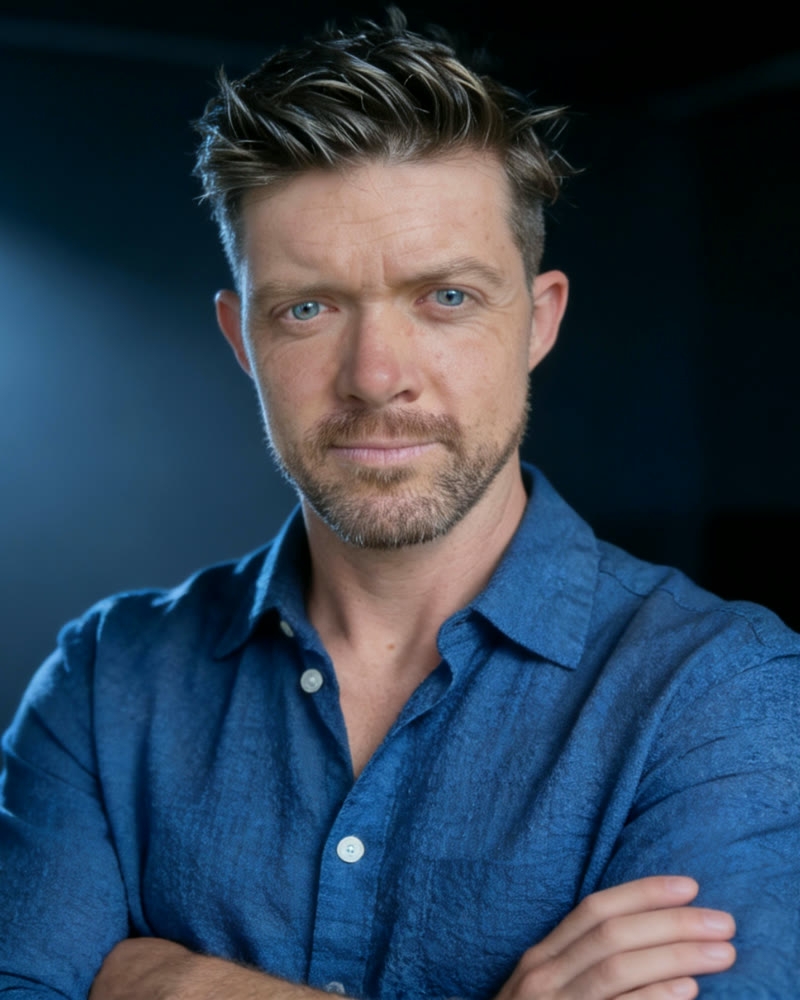
Personal trainer, Holistic Health Practitioner and the creator of Applied Movement Neurology and the ventral horn technique. Practitioners in 65 countries have trained with AMN since 2012.
Enrol today
Every week without the test is another week of guessing. Start tonight, and run your first identify, reset, re-test loop this week.
AMN Corrective Exercise Specialist
Pay £599 in full or 2 × £300. Have a discount code? Add it at the payment step.
Questions
Advanced personal trainers, movement therapists and clinicians working 1:1 with clients in a corrective way, including physiotherapists, osteopaths and chiropractors. No neurology background is needed. You learn just enough neuroanatomy to understand why each technique works.
Most students study 15 to 20 minutes a day. There are no time limits and you keep lifetime access, so you go at your own pace.
Yes. The course ends with a final exam. Pass it and you receive your certificate and the AMN Corrective Exercise Specialist badge.
Yes. Pay £599 in full, or 2 monthly payments of £300.
That depends on your governing body. Most reputable CPD bodies award points when you send them the course details, which we provide after your exam.
No. AMN is an exercise-based system. It does not diagnose or treat medical conditions and does not replace medical advice. Acute or unexplained pain should first be assessed by a licensed medical professional.
Level 1 Practitioner: the cerebellum, balance, posture and coordination. Take both together in the New Student Bundle for £1,285 and save £143.
Watch the first lesson tonight. Use it with a client this week.
Enrol for £599