“I sit up straight, then forget.”
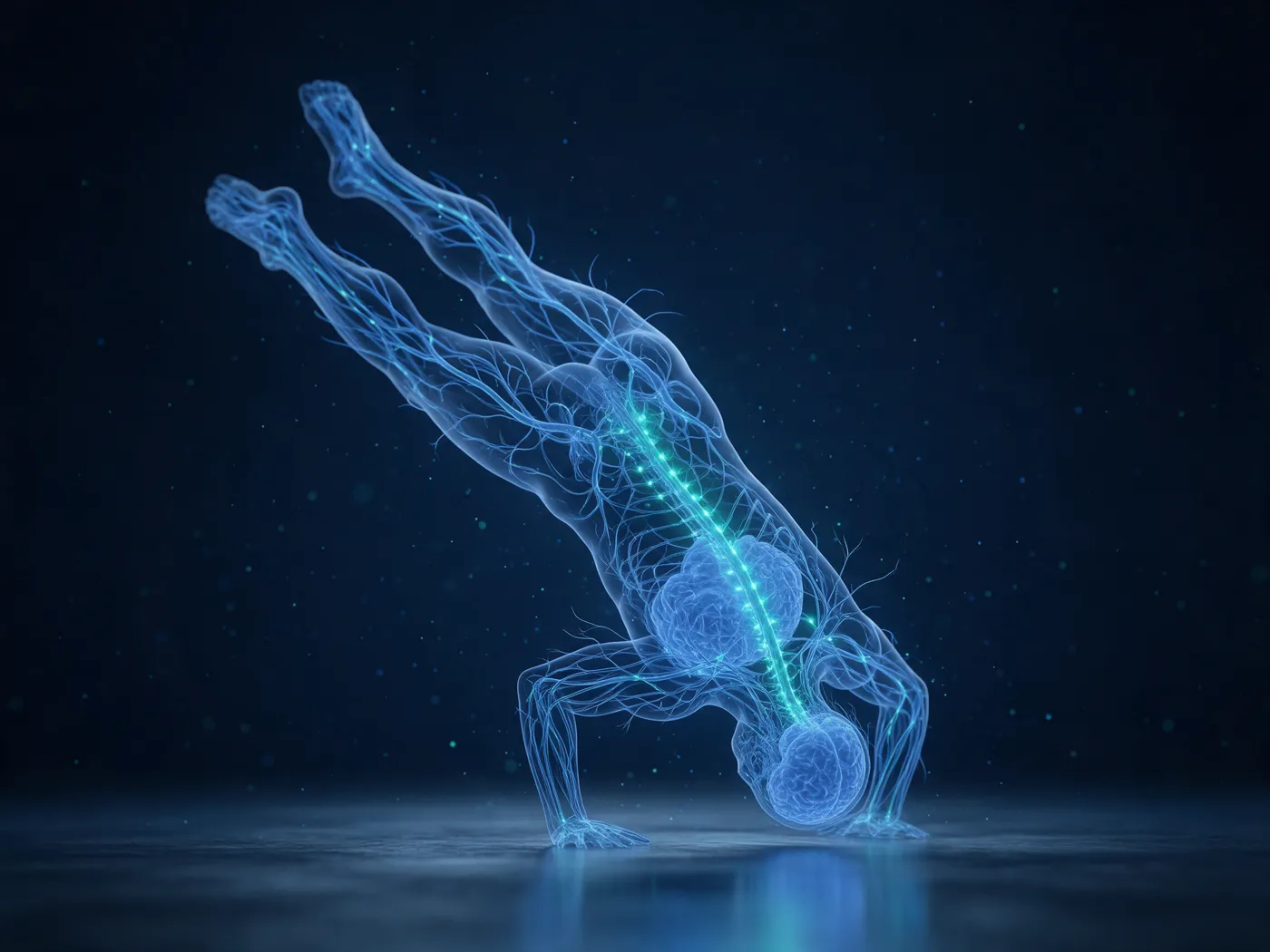
Upright posture depends on reflexes that keep the extensors switched on. You will learn the spinal push test and how to fire those reflexes, then push again.
 AMN Level 1 Practitioner · Online certification
Your client stands tall while you cue them. Ten minutes later, walking to the car, the slump is back. Posture, balance and coordination run below conscious control, in the cerebellum, the inner ear and the eyes. Level 1 teaches you to test those systems side by side, calibrate the one that is off, and re-test while your client watches.
Or 2 × £290 · lifetime access · exam and certificate
£580£829You save £249
Black Friday price, paid in full · or 2 monthly payments of £290
+ The Client Toolkit, freeOnly when you pay £580 in full. Not with 2 monthly payments.
You have seen these clients
Strength work helps, and the problem keeps coming back. That is the sign you are training the muscle while the brain keeps running the old pattern.
Upright posture depends on reflexes that keep the extensors switched on. You will learn the spinal push test and how to fire those reflexes, then push again.
Close the client’s eyes and watch. Sway, rotation or tilt to one side points to the vestibular system on that side. You will learn to calibrate it and re-test.
Being uncoordinated is not a fixed trait. Stimulate the right visual pathway, then give a movement that challenges it, and coordination can change in the session.
The cerebellum is keeping score.
Every time your client moves, the brain sends a copy of the plan to the cerebellum, which checks it against what actually happened. When that check is off on one side, posture, balance and coordination drift on that side. Level 1 shows you which side and which zone.
Ahead of its time
The predictive brain, the vestibular system, the eyes as a motor organ: research keeps catching up with these ideas. AMN turned them into hands-on tests for trainers and therapists, and has taught them to more than 4,000 students since 2012.
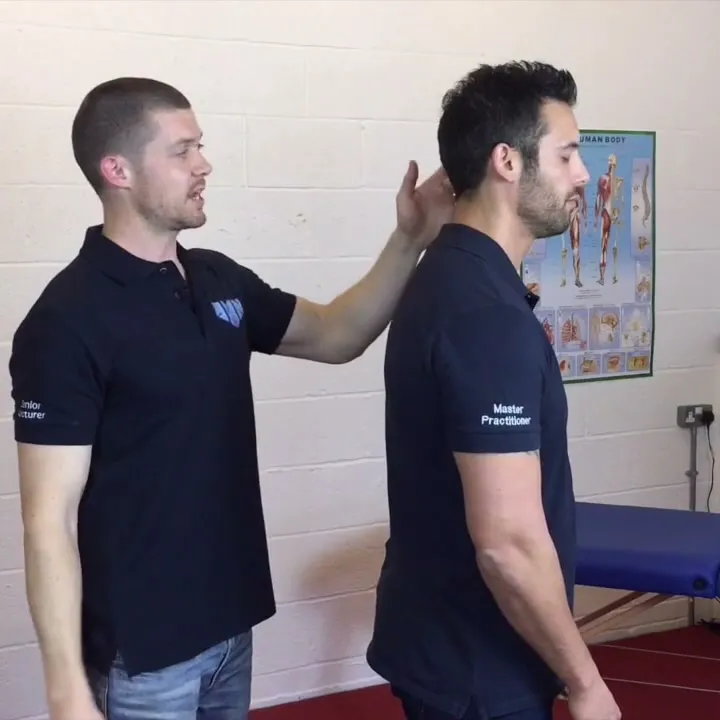
The spinal push test, Romberg’s and sharpened Romberg’s, gait and cerebellar eye positions. Quick, visible tests that show you which side is struggling.
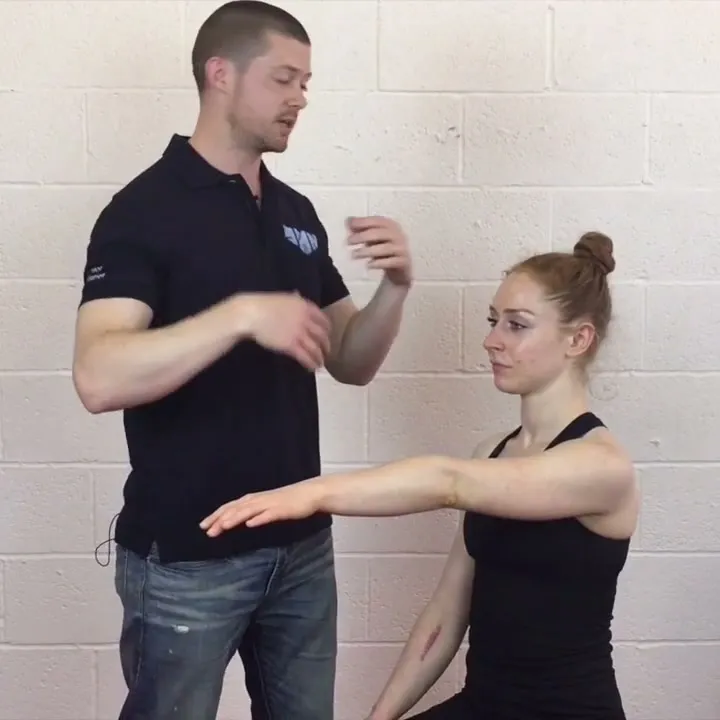
Vestibular and endocrine contact points, light touch and the muscle test. You find where the signal drops and restore it, then check the test has changed.
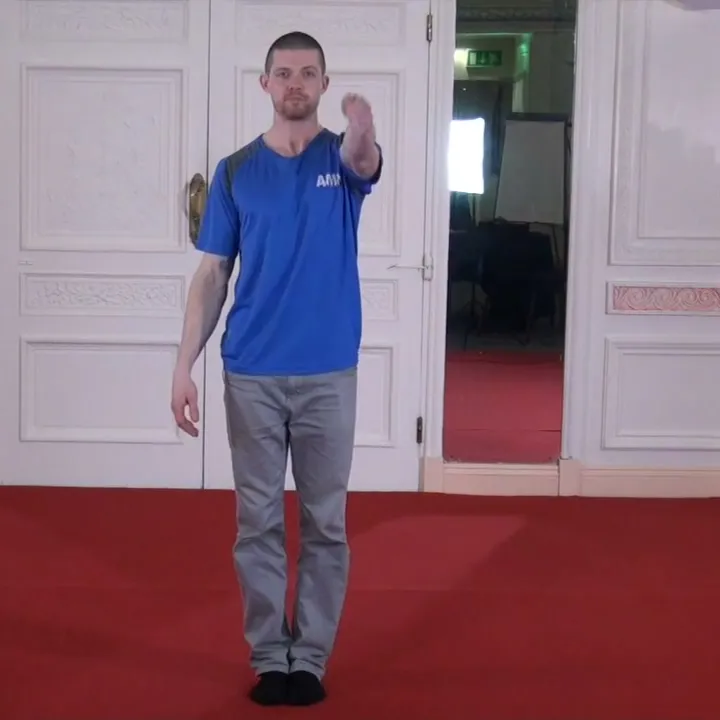
Figure 8s, infinity walks, crawling patterns and eye drills that reset gain in the cerebellum, so the new pattern holds when your client moves.
Inside Level 1
Every assessment ends with a re-test. Your client feels the push test change and watches their own balance improve, and that is what makes them come back and refer friends.
Chapter · Posture and Vestibular Somatic Integration
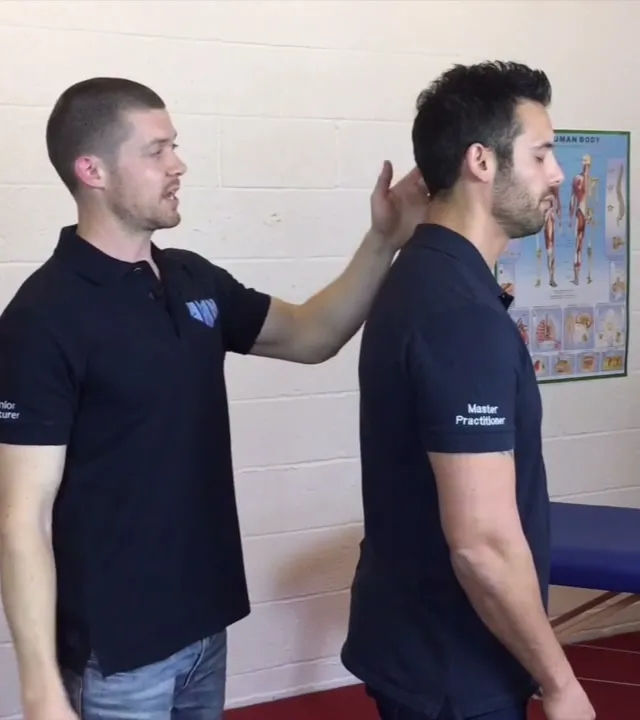
You stand beside the client, hand on the neck, and push gently down through the spine. Where it gives, posture is not being held by reflex. You calibrate, push again, and it holds.
Posture is easy to keep while you are still and thinking about it. Once your client moves or their attention goes elsewhere, the reflexes have to do the work. This chapter takes you from bioelectricity and the vestibular system to getting an “offline” client back online, then through the corrective movements that make the result last.
With vision taken away, the body has to balance on the inner ear and proprioception. A pattern of sway, rotation or tilt to one side shows you which vestibular side to calibrate, and the same test proves it worked.
Foundations · Modules 1–3
Neural anatomy, the “little brain” and its medial, intermediate and lateral zones. What each zone controls, and what you see when one is under-firing.
Coordination · Module 7
The magnocellular and parvocellular pathways and efferent copy. Assess with light and a muscle test, then use crawls and rhythm to build coordination that transfers to movement.
Midline assessments
Gait, vestibular canals, canal bounces, cerebellar eye positions, eye isometrics, the jaw and cranial drills, and infinity walks.
Intermediate zone
Fine motor accuracy, the vestibulo-ocular reflex and resetting gain in the cerebellum, with figure 8s, reactive 8s and how to stack your findings.
Putting it together
Purkinje cell assessment, integrated visuomotor work, cervical kinesthesia, pain and Level 1, respiration basics, and how to interpret what you find.
Certification
Pass the Level 1 exam and qualify as an AMN Level 1 Practitioner, with the Level 1 badge for your profile and your clinic.
Included
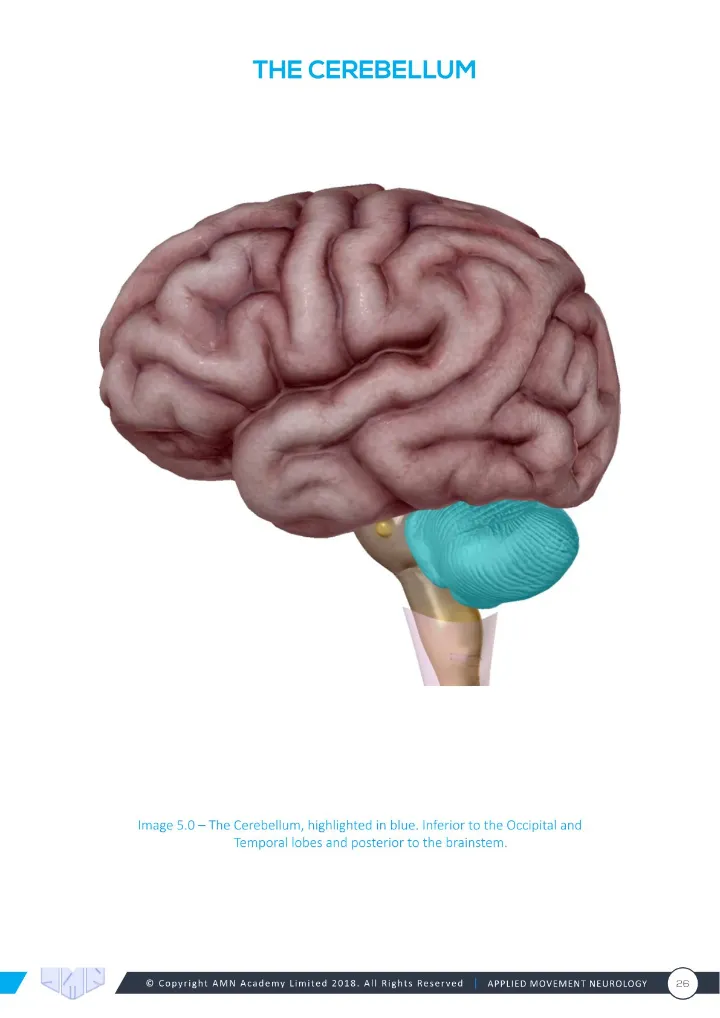
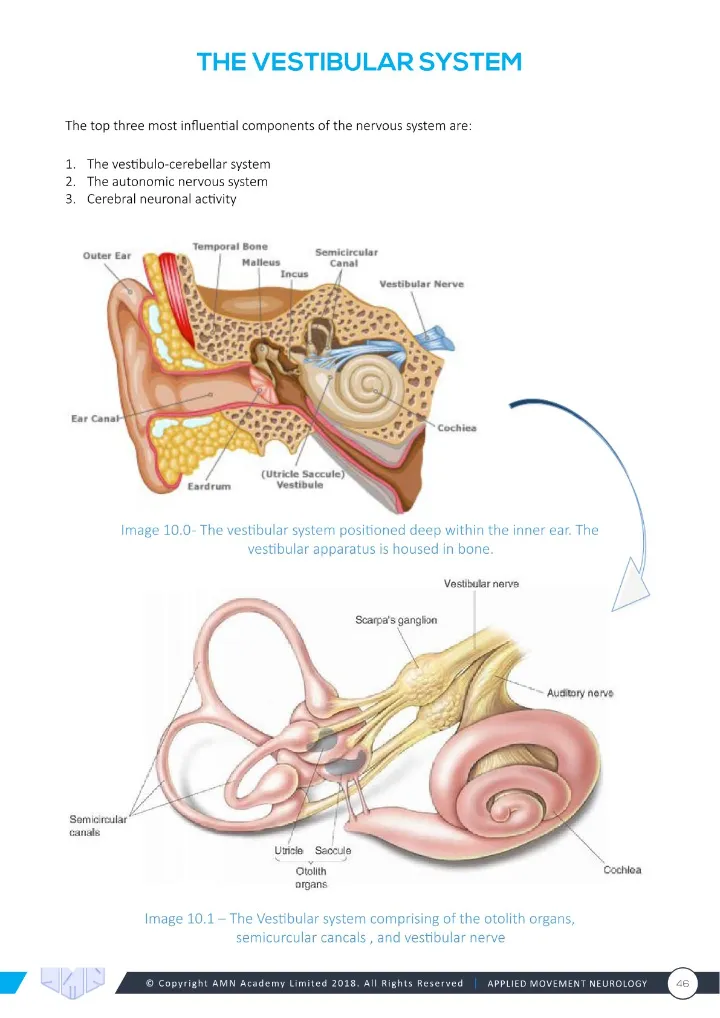
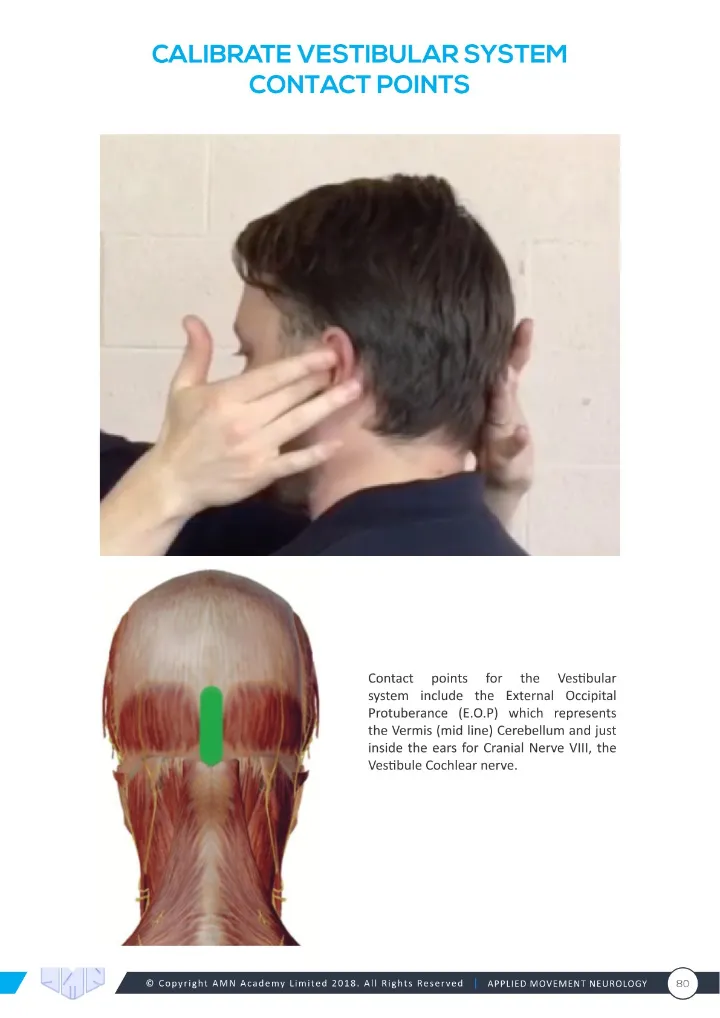
The Level 1 Practitioner Manual follows the lessons, with illustrations of every system you test and photos of every contact point.
The full course
Most students finish in 3 to 5 months at 15 to 20 minutes a day. Access never expires.
Neural anatomy, the cerebellum and its functional zones, the vestibular system and manual muscle testing, posture part one (Vestibular Somatic Integration: Romberg’s, getting clients online, vestibular and endocrine contacts, spirals, reflex integration), posture part two (the spinal push test, spinal stabilisation, gaze and the vestibulocolic reflex, corrective movements), and coordination (magnocellular and parvocellular pathways, efferent copy, crawling patterns, quadruped rotary movement).
The assessment process, gait, Romberg’s and sharpened Romberg’s, vestibular canals, functional midline, canal bounces, cerebellar eye positions, eye isometrics, spine, jaw and craniofacial structures, cranial drills and infinity walks.
Intermediate zone assessments, fine motor accuracy, the vestibulo-ocular reflex, resetting gain in the cerebellum, figure 8s and reactive 8s, reactive, passive and active patterns, the entire assessment process and stacking.
Introduction, assessment and practical.
Integrated visuomotor work, cervical kinesthesia, pain and Level 1, respiration basics, the bigger picture and interpreting findings. Then the Level 1 final exam.
Practitioners
After 25 years in fitness and specializing in back care, discovering AMN was a game-changer. From my first workshop in 2017 to advancing through Levels 1 and 2, and now diving into Level 3, I'm in the most thrilling learning phase of my career. The skill to alleviate pain and profoundly impact lives, from sleep to gut health, has been transformative.
Before AMN I had to refer clients with some what are now basic issues to other treatments. … It's completely changed my practice for the good and clients refer friends all the time.
It was the best move in my career to study this technique.
Your teacher
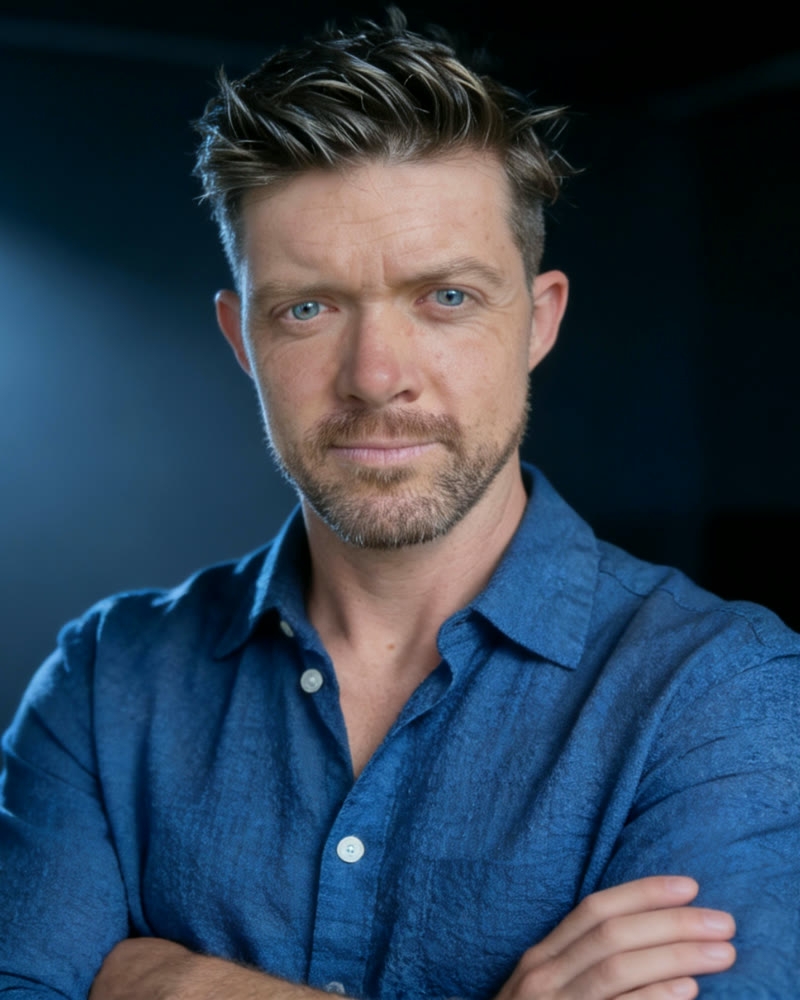
Personal trainer, Holistic Health Practitioner and the creator of Applied Movement Neurology. Practitioners in 65 countries have trained with AMN since 2012.
Four more complete AMN courses, yours for as long as AMN runs its courses. Movement sequences you can coach, hands-on therapy tools, lifestyle lessons and the AMN Docuseries, to learn from and use in your own sessions.
Pay in
fullOnly when you pay £580 in fullNot included with 2 monthly payments. Choose pay in full at checkout.
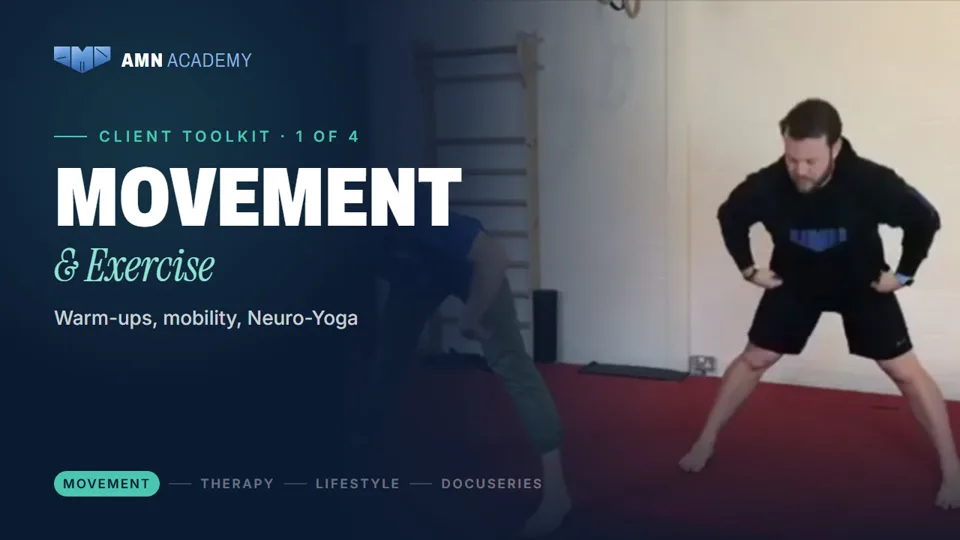
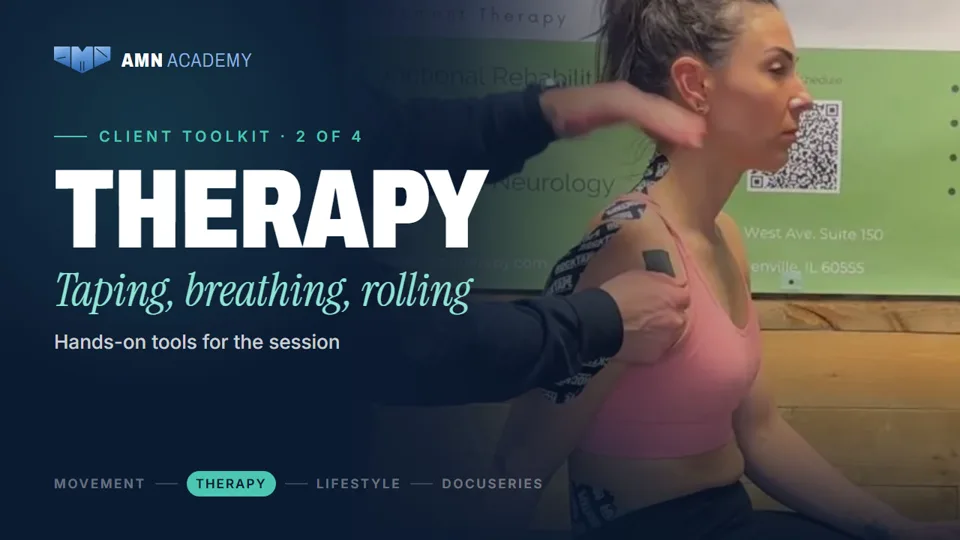
Black Friday bonus · pay in full
Pay £580 in full this Black Friday and the Client Toolkit comes with it, free: four more complete AMN courses to learn from and use in your own sessions, from movement sequences you can coach to taping, breathing and foam rolling. It is not included with 2 monthly payments.
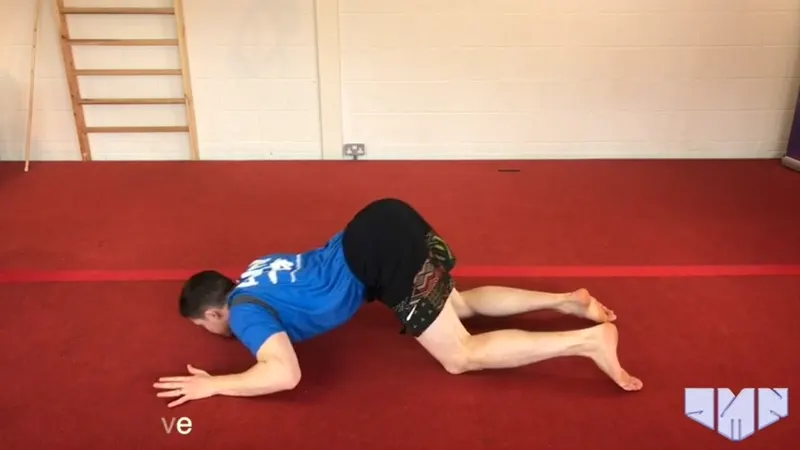
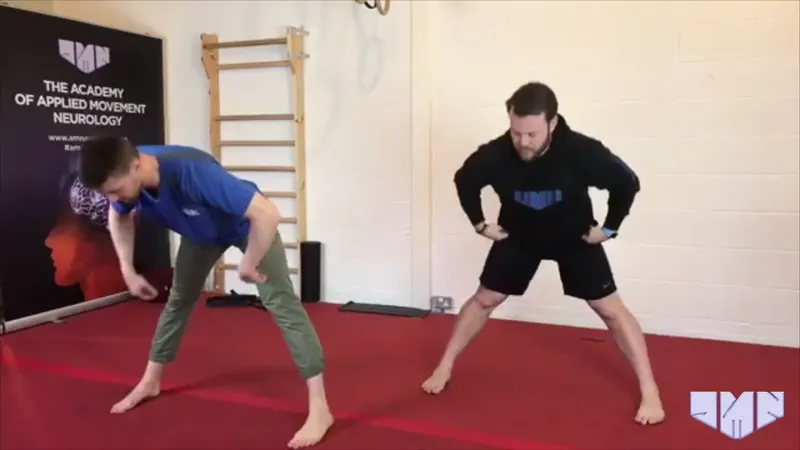
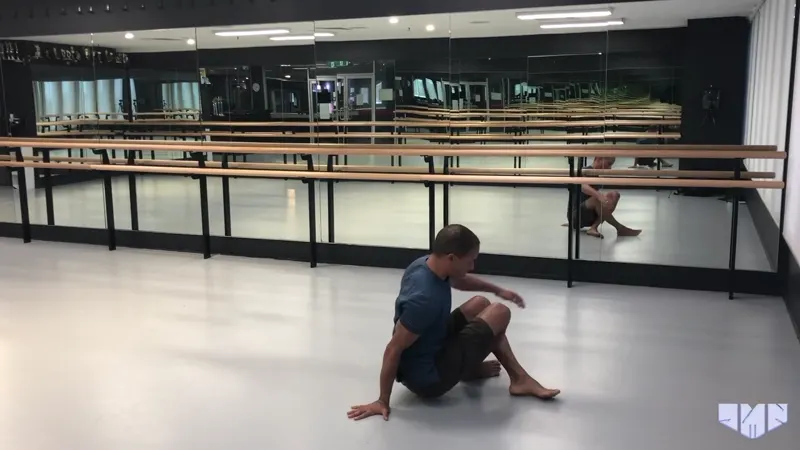
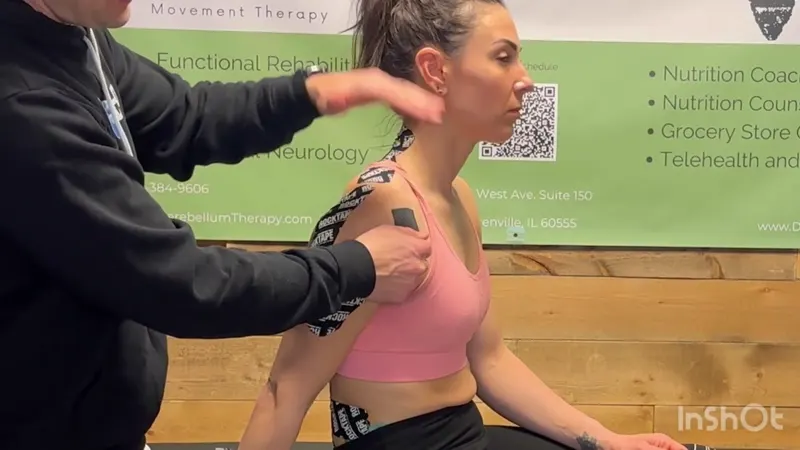
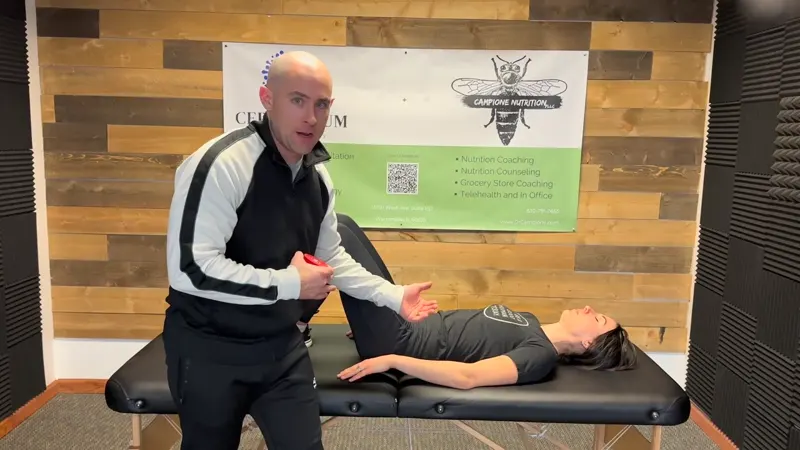
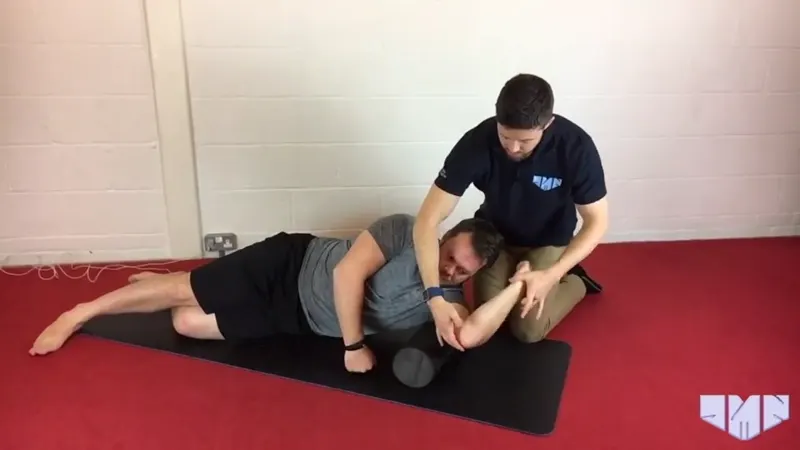
Yours for as long as AMN runs its courses, for you as a practitioner. Already own part of it? You get the rest. Pay in full at checkout to claim it.
Pay £580 in full and get it freeEnrol today
The clients other professionals pass on, the ones who are “just clumsy” or whose posture never sticks, become the cases you are known for.
AMN Level 1 Practitioner Certification
£580£829You save £249
£580£829You save £249
Pay £580 in full or 2 × £290.
Questions
Level 1 is the next step after CES, the Corrective Exercise Specialist certification, and builds on its muscle testing. If you are new to AMN, the CES + Level 1 bundle gives you both for £899 this Black Friday.
Advanced personal trainers, movement therapists and clinicians who want to work with posture, balance and coordination at the level of the nervous system, through the cerebellum, the vestibular system and the eyes.
Most students finish in 3 to 5 months at 15 to 20 minutes a day. There is no time limit and your access never expires.
Yes. Choose 2 monthly payments of £290 at checkout, or pay £580 in full.
Yes. The course ends with the Level 1 final exam. Pass it to become a certified AMN Level 1 Practitioner.
Check with your professional body. We can provide documentation of your participation to submit to them.
No. AMN is an exercise-based system. It does not diagnose or treat medical conditions and does not replace medical advice. Clients with dizziness, vertigo or balance problems that have not been checked should see a medical professional first.
The AMN Level 2 Practitioner Certification, the next step on the AMN pathway.
120 lessons, a 222-page manual and a certificate. £580, or 2 × £290.
Enrol for £580