
“It flares when life gets busy.”
Every emotion has a physical representation, and old emotional conflicts can shape how a client moves and feels. The limbic screen tests from that reference point.
 AMN Level 3 Practitioner · Online certification
By Level 3 you can find almost any muscle that has switched off. This level asks what switched it off: an old emotional memory, the way the client breathes, the gut, the immune system, the body clock, hydration, or the connective tissue itself. Eight screens, all read through the muscle test you already use.
Or 2 × £830 · lifetime access · exam and certificate
The cases that come back
The test clears and the client walks out moving well. A week later the same muscle is off again, because something upstream keeps switching it off. Level 3 screens for it.
Every emotion has a physical representation, and old emotional conflicts can shape how a client moves and feels. The limbic screen tests from that reference point.
The gastrointestinal screen checks the stomach, small and large intestine and the balance of gut bacteria. The immune screen looks for bacterial, fungal, viral and parasitic correlations.
The respiratory screen works on reflexive control of breathing from the brainstem, and in some cases changes how the client breathes on the spot.
Find what keeps switching it off.
The muscle test stays the same. What changes is the question you ask with it: which of the body’s balancing systems is out, and where.
Ahead of its time
Around 80% of the nerve endings in the skin report on the inner state of the tissues, not on movement. Level 3 is built on that system, sensory autonomics, and gives you a screen for each of the systems that keep the body in balance.
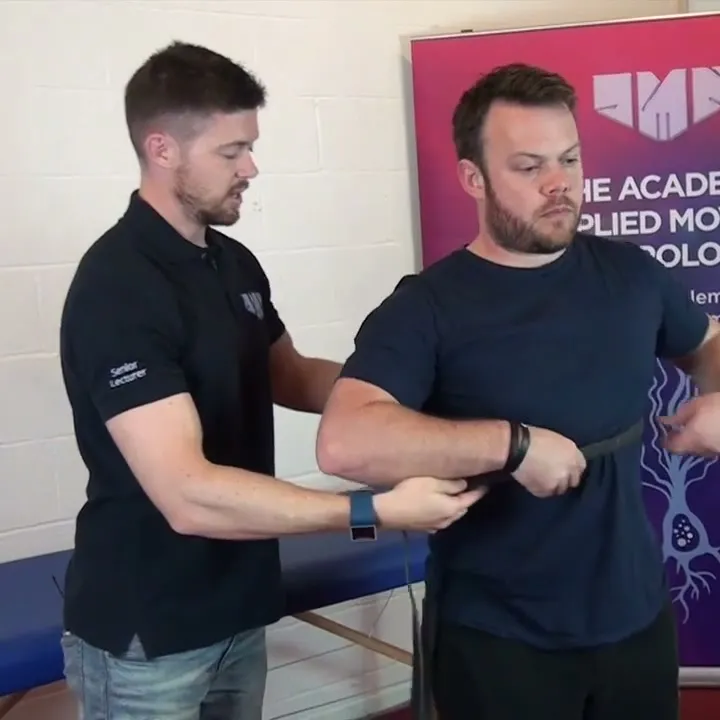
Scan eight files in sequence, from limbic to structure. Each one works as a mini master folder for a physiological system.
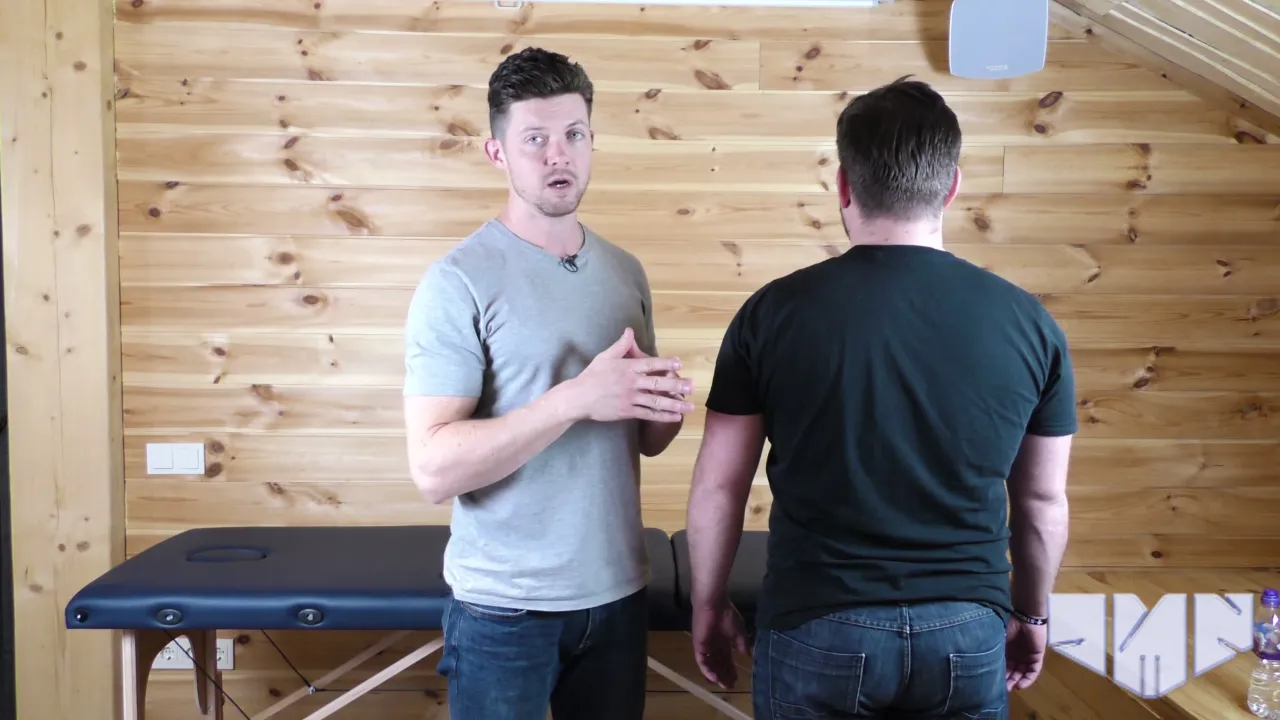
Discard the contacts that test strong and stack the ones that give a relaxation, until you can see the pattern of charge across the tissues.
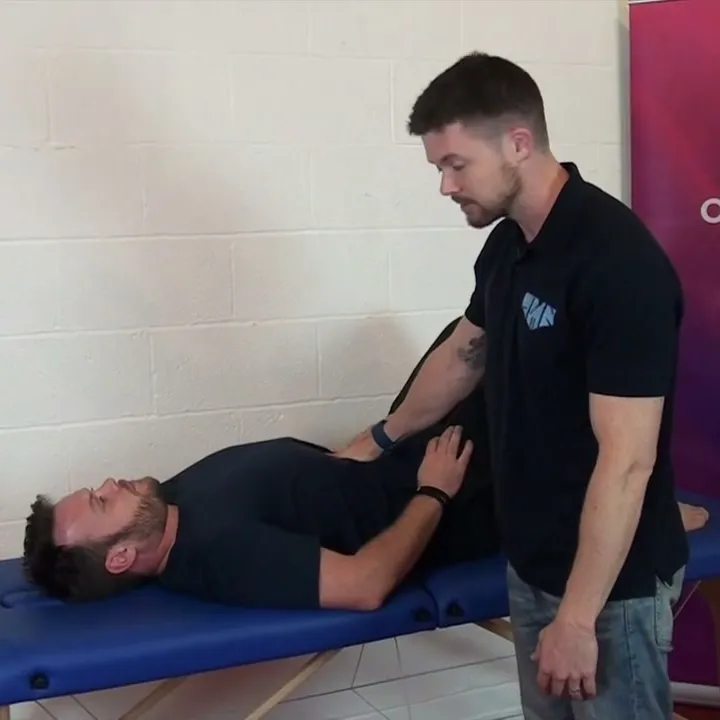
Calibrate each finding inside its file before moving on, then re-test. The client feels the change in the same session.
Inside Level 3
The theory first, then each screen on video with a real client, then a module on putting it all together in a session.
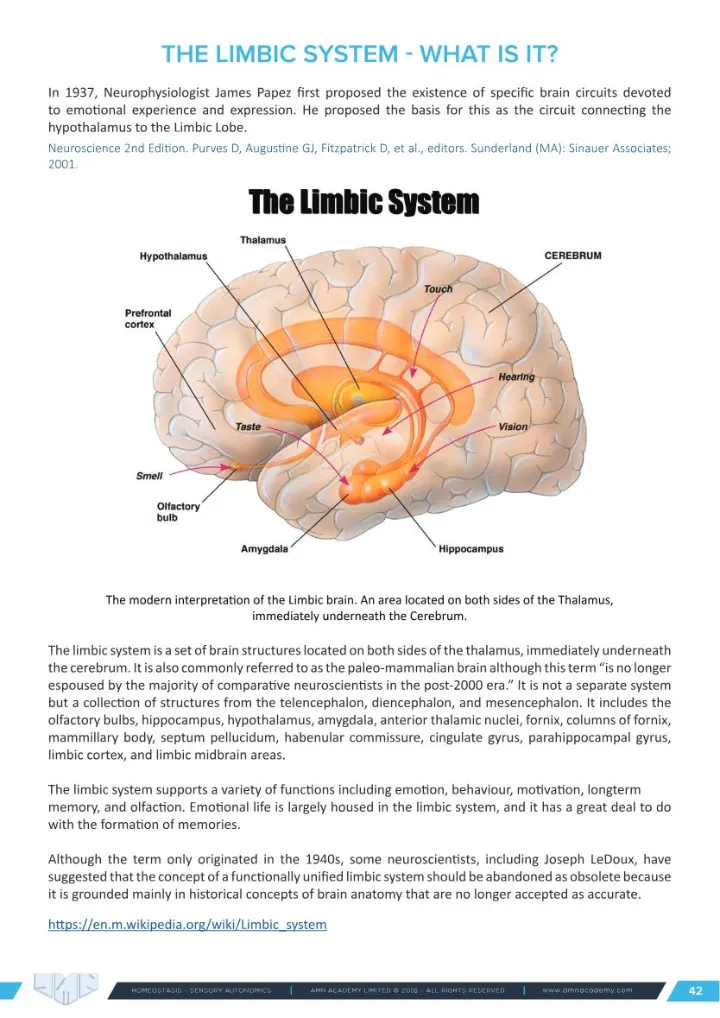
Screen 1 · The limbic system
Think of the last time a client was stressed. The tension showed up somewhere physical. Some of those patterns are years old.
Historical emotional conflicts can influence how a client moves, how they feel, and can sit behind chronic complaints. The limbic screen tests whether an emotional memory is relevant to what you have found, so you can include it in the calibration.
The limbic file sits at the top of the homeostasis screen. Assessing from it first can uncover the deepest link behind a client’s problem.
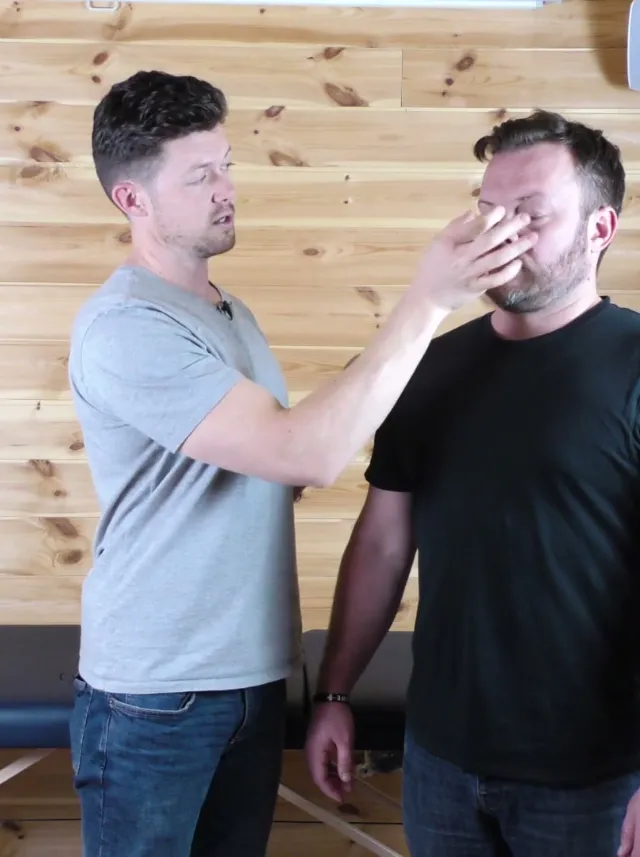
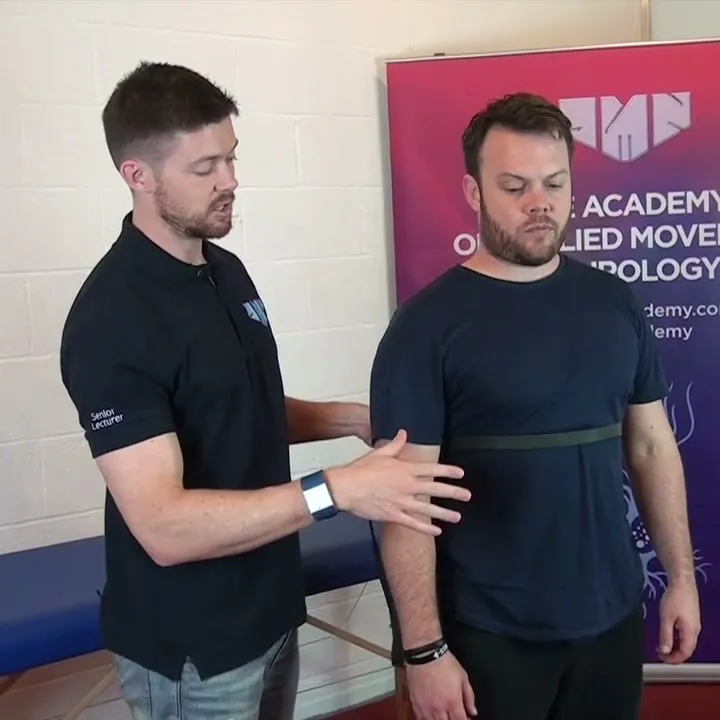
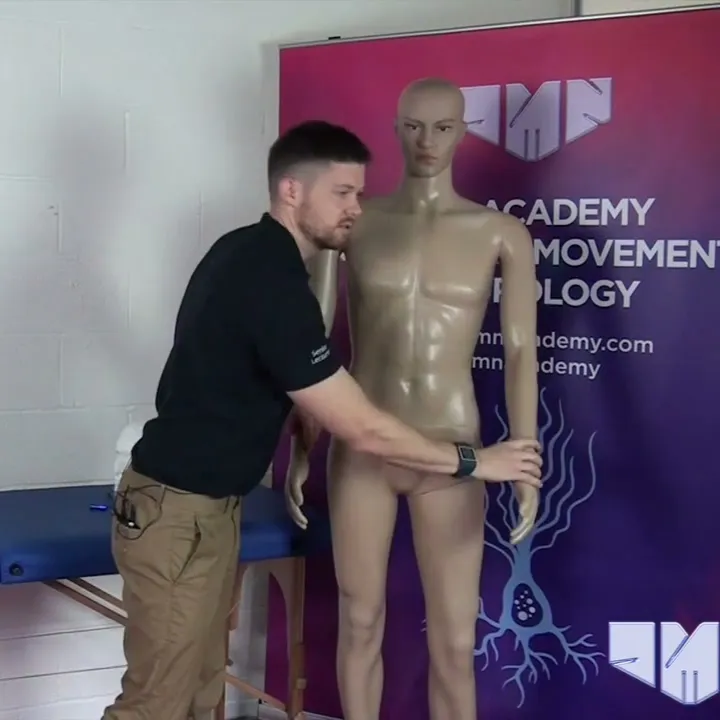
Respiration · 4 lessons
Diaphragm, medulla and pons contacts for accessory breathing patterns, and calibrating the reflexive control of respiration.
Gastrointestinal · 2 lessons
The stomach, small and large intestine and the microbiome, with screen flows for each and the link between gut and neurotransmitters.
Immune · 2 lessons
Find which part of the immune system carries the charge, then test for a viral, bacterial, fungal, mycobacterial or parasitic correlation.
Circadian · 4 lessons
How the vestibular system ties balance, autonomic control, temperature and anxiety together, and when the liver’s daily rhythm sits behind a problem.
Osmolarity · 3 lessons
Test when a client needs water and when they don’t, how it relates to blood pressure, and its effect on the neck, low back and pelvic muscles.
Structure · 3 lessons
When movement and manual work don’t resolve it, identify whether the connective tissue itself is driving the problem, and how to resolve it.
Included
The Level 3 Homeostasis manual sets out the science, the contacts and the assessment flow for every screen, with references throughout.

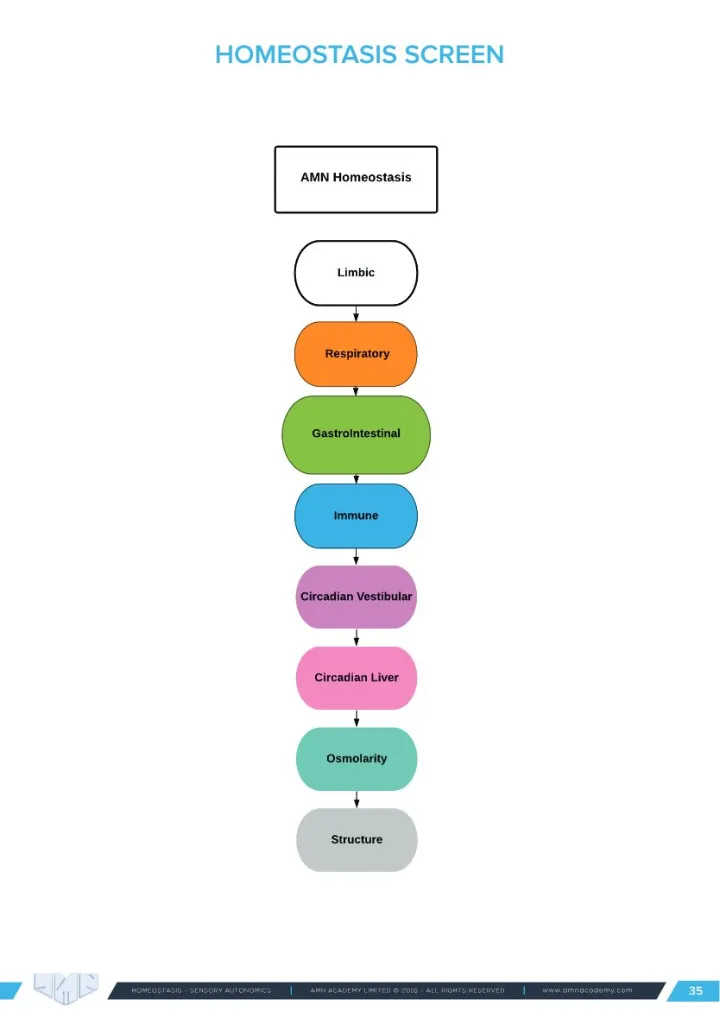

The full course
In-depth lectures and practical demonstrations. Most practitioners finish in 5 to 7 months at 15 to 20 minutes a day. Access never expires.
Interoception, the hypothalamus, the insular cortex and the autonomic nervous system, and how the homeostasis screen is organised.
How emotions affect the body, emotional memory, the limbic screen contacts, and calibrating an emotional finding.
Reflexive control of breathing from the brainstem, accessory breathing patterns and the respiratory screen.
The stomach, intestines and microbiome; the immune system and testing for pathogen correlations.
The circadian vestibular and liver screens, fluid balance and hydration, and the structure screen for joints, ligaments and fascia.
Running the full homeostasis screen in a session, combining it with Level 1 and 2 findings, and the Level 3 final exam.
Practitioners
After 25 years in fitness and specializing in back care, discovering AMN was a game-changer. From my first workshop in 2017 to advancing through Levels 1 and 2, and now diving into Level 3, I'm in the most thrilling learning phase of my career.
AMN is the best thing I have seen in 2 decades of ongoing education & without question, it’s by quite some distance, the most impactful thing I have come across in terms if changing movement, resolving pain, as well as all manner of dysfunction.
It was the best move in my career to study this technique.

Your teacher
Personal trainer and the creator of Applied Movement Neurology. Level 3 is the final practitioner level of the system he has taught since 2012.
Enrol today
Eight screens for the systems behind the muscle: emotion, breathing, the gut, immunity, the body clock, hydration and structure. Finish with the exam and the Level 3 certificate.
AMN Level 3 Practitioner Certification
Pay £1,659 in full or 2 × £830. Have a discount code? Add it at the payment step.
Questions
Yes. Level 3 requires the AMN Level 2 Practitioner Certification, so everyone arrives with the Neuro-Skeletal Screen in hand.
Level 2 practitioners: advanced personal trainers, movement therapists and clinicians who want to work with complex, recurring cases.
Most practitioners finish in 5 to 7 months at 15 to 20 minutes a day. There is no time limit and your access never expires.
Yes. Choose 2 monthly payments of £830 at checkout, or pay £1,659 in full.
Yes. The course ends with the Level 3 final exam. Pass it to become a certified AMN Level 3 Practitioner.
Check with your professional body. Once you have completed the exam we can provide the course information to submit to them.
No. AMN is an exercise-based system. It does not diagnose or treat medical conditions and does not replace medical advice. Clients with unexplained or worsening symptoms should see a medical professional first.
The Level 3 Mastermind, with advanced applications of the homeostasis screen.
Eight screens for the systems behind the muscle. £1,659, or 2 × £830.
Enrol for £1,659